
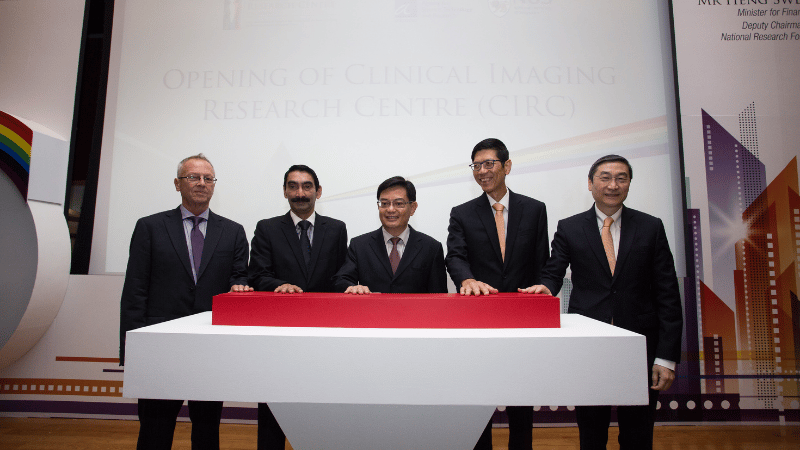
Launch mechanisms in Singapore can turn a few seconds on stage into the defining moment of an entire event. Whether an organisation is opening a facility, introducing a service, unveiling a new identity or celebrating an important milestone, the activation gives everyone in the room a clear moment to remember.
However, creating that moment takes more than placing a ceremonial button on stage. The mechanism should suit the occasion, operate reliably and connect naturally with the wider event story. An experienced event company in Singapore can bring these elements together and turn a simple announcement into a coordinated experience.
A countdown may last only five or ten seconds. Yet behind those seconds may be concept development, fabrication, animation, programming, rehearsals, stage management and technical testing.
That planning matters because a launch mechanism has several jobs to do at once. It needs to be easy for VIPs to operate, clear enough for the audience to understand and visually strong enough for photography. At the same time, the mechanism should reflect what is actually being launched.
A medical institution, for example, may need a very different visual language from a youth initiative. Likewise, a green finance institute, publication launch and anniversary dinner should not automatically use the same activation just because all three are launch events.
HYDSE’s portfolio reflects this variety. Its launch-related work spans education, finance, healthcare, government initiatives, publications, facilities and milestone events. More importantly, the examples show that a launch mechanism does not have to follow one fixed formula.
Before exploring the different ideas in detail, here is a quick overview.
| Launch mechanism | Best suited for | Main advantage | Key consideration |
| Push-button activation | Corporate, institutional and official events | Easy to understand and execute | Needs customisation to avoid looking generic |
| Insert-and-trigger mechanism | Partnerships, collaborations, milestone events | Makes the action symbolic | Objects and sensors must align reliably |
| Multi-person activation | Joint ventures, government events, partnerships | Shows collaboration clearly | Participant positioning needs rehearsal |
| Reveal or unveiling | Logos, facilities, galleries, products | Creates natural anticipation | Visibility and timing are critical |
| Kinetic structure | Innovation and brand events | Adds physical transformation | Requires careful engineering |
| Hydraulic or mechanical reveal | Product launches and major openings | Strong visual impact | Needs space, testing and safety planning |
| Digital multimedia launch | Technology, research and digital services | Flexible storytelling | Content should support the message |
| Touchscreen or sensor activation | Technology and innovation events | Interactive and contemporary | Interface must remain simple |
| Time capsule or symbolic object | Education, heritage, anniversaries | Gives the launch emotional meaning | Symbolism must be relevant |
| Custom hybrid mechanism | High-profile or highly customised events | Combines physical and digital elements | Requires close production coordination |
What Is a Launch Mechanism?
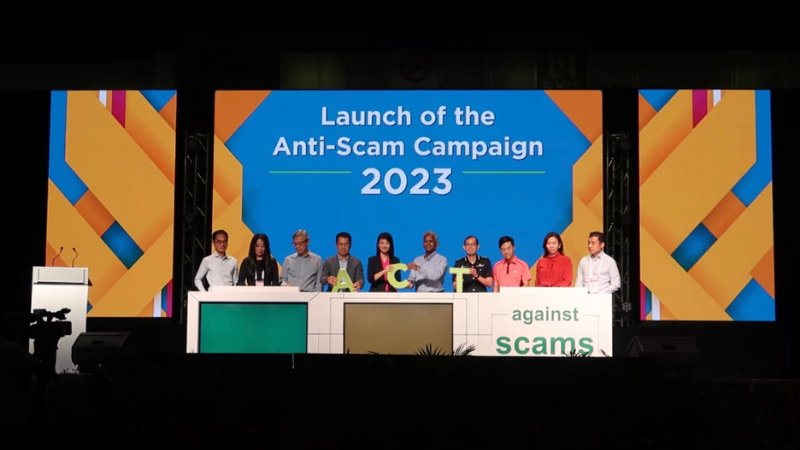
A launch mechanism is the physical, digital, mechanical or interactive action that marks the official introduction of something during an event.
For example, it could be a button that triggers an animation. It could also involve several VIPs inserting symbolic objects into a structure, touching sensors together, signing a publication or revealing something hidden from view.
In other words, the mechanism tells the audience: this is the moment the launch becomes official.
However, an effective mechanism does more than give senior guests something to press or touch. It should also support the meaning behind the announcement.
Imagine an organisation launching an initiative built around collaboration. Rather than asking one person to press a button, several stakeholders could complete different parts of the activation together.
A technology organisation, on the other hand, may prefer an interactive screen or sensor-based launch. Meanwhile, an anniversary could use a symbolic object linked to the organisation’s history.
Because of this, organisers should treat mechanism planning as part of the overall event concept rather than a last-minute equipment decision.
An event management company in Singapore may need to coordinate the activation with stage design, multimedia, lighting, sound, fabrication and show calling. When the team develops these elements together, even a simple action can feel much more significant.
A launch mechanism usually includes four layers
- The action: What the VIP or participant physically does.
- The response: What happens immediately after the action.
- The visual story: How the screen, lighting, branding or object communicates the announcement.
- The event flow: How the activation connects with speeches, videos, photography and the next programme segment.
The strongest mechanism is not necessarily the most complicated one. Instead, it is the one that makes immediate sense in the context of the event.
Why Does the Launch Moment Matter?
Corporate and institutional events often include speeches, presentations, panel discussions, networking and videos. The launch sequence has a different role, however, because it creates a clear turning point.
Before the activation, the organisation is preparing to introduce something new. Afterwards, the launch officially marks the beginning of the product, programme, facility or initiative.
As a result, the launch often becomes one of the strongest visual memories from the event.
It gives photographers an obvious hero shot. Similarly, it gives invited media a visual representation of the announcement and creates a natural role for senior stakeholders.
The audience benefits as well. Rather than remembering every detail of a long programme, guests have one specific action they can associate with the occasion.
What a strong launch moment can achieve
A well-planned activation can help an organisation:
- Create a clear ceremonial milestone.
- Give senior representatives a meaningful role.
- Produce stronger event photography and video footage.
- Make a complex announcement easier to understand.
- Reinforce the event’s theme or brand identity.
- Build anticipation before the reveal.
- Give media and guests a recognisable visual moment.
- Transition smoothly into the next part of the programme.
That does not mean every launch needs fireworks or elaborate machinery. In fact, spectacle without meaning can quickly feel generic.
The best launches often work because the mechanism supports the message.
For example, if an organisation is entering a new phase, the activation might show transformation. If several organisations are forming a partnership, the mechanism can require everyone to contribute.
Likewise, an opening ceremony might use an action that represents access, arrival or the start of operations.
When choosing the best event company in Singapore for this type of project, organisations can therefore look beyond whether a team owns an activation device. It is equally useful to consider whether the team can understand the objective and translate it into an appropriate launch experience.
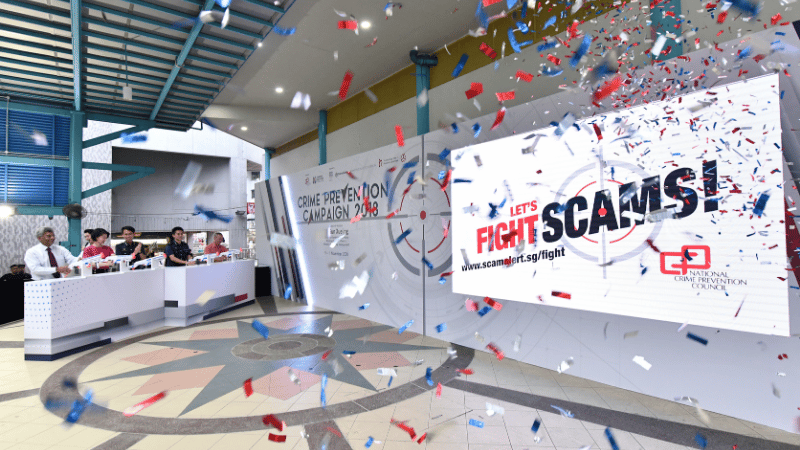
10 Types of Launch Mechanisms for Events
There is no single mechanism that works for every event.
Instead, organisers can choose from several formats and adapt them to the occasion. In practice, different types can also be combined to create a more customised experience.
1. Push-Button Activation
The push-button activation remains popular because everyone immediately understands what to do.
Usually, the emcee begins a countdown before one or several participants press a button. The action then triggers an animation, lighting sequence, video, soundtrack or physical reveal.
It is simple, but simplicity does not need to mean generic.
For example, the activation console can incorporate the organisation’s branding, visual identity or an object related to the launch. A sustainability-focused event might use visual elements inspired by growth or energy, while a technology event could use a cleaner interface-inspired design.
The button itself is only the trigger. What matters is how the creative and production teams shape the experience around it.
Because of this, an event company in Singapore can add more value by connecting the button, animation, stage visuals and countdown into one coordinated moment.
Push-button activation works well when:
- The audience needs to understand the interaction immediately.
- Several VIPs need to participate together.
- The activation is connected to multimedia content.
- The stage programme is tightly timed.
- The organisation prefers a clean and formal launch moment.
2. Insert-and-Trigger Mechanisms
An insert-and-trigger mechanism replaces the usual button with an object that participants place into position.
For instance, the object could resemble a key, token, branded artefact or puzzle piece. Once inserted, a concealed sensor detects the action and activates the launch sequence.
This format works particularly well when the event is about connection, partnership or completing something.
Imagine three organisations launching a joint programme. Each representative could hold one component, while the final activation happens only when all three pieces come together.
As a result, the mechanism itself tells part of the story.
The physical interaction also gives photographers a useful visual before the actual reveal. Meanwhile, the triggered animation or lighting creates the second part of the launch moment.
3. Multi-Person Activation
Many launch events involve several important stakeholders.
A government agency may be working with industry partners. Likewise, a university could be collaborating with researchers, businesses or another institution.
In those situations, asking one person to trigger the entire launch may not represent the nature of the project.
A multi-person mechanism creates a more collaborative moment.
Participants might:
- Place their hands on separate sensors.
- Turn individual components.
- Insert different objects.
- Press separate activation points.
- Complete one symbolic structure together.
However, the interaction still needs to feel effortless.
VIPs should not have to remember complicated instructions while standing in front of an audience. For this reason, an event management company in Singapore should consider stage positions, timing and user experience alongside the technical system itself.
The goal is simple: everyone should know where to stand, what to do and what happens next.
4. Reveal and Unveiling Mechanisms
Sometimes the strongest activation is simply revealing something that was previously hidden.
A curtain can open. Panels can move. A concealed logo may appear, or an installation can illuminate for the first time.
Because the audience knows something is waiting to be revealed, this format creates anticipation naturally.
It works particularly well for:
| Event type | Possible reveal |
| New logo | Rotating panel, curtain or LED transition |
| Gallery opening | Integrated backdrop or unveiling |
| New facility | Plaque, architectural model or symbolic opening |
| Product launch | Hidden display or lift |
| Corporate rebrand | Old-to-new visual transformation |
| Anniversary | Timeline or commemorative object |
At the same time, physical unveiling can be combined with screen content. An animation could build towards the moment before the actual object is uncovered.
When the timing is right, the digital sequence and physical reveal feel like one continuous action.
A reveal does not need to be huge. Instead, good lighting, sightlines and timing can make even a compact mechanism feel significant.
5. Kinetic and Moving Structures
Kinetic mechanisms use movement to create transformation.
Parts of a structure may rotate, slide, unfold or come together. For example, separate pieces could gradually form a logo, symbol or architectural shape.
Movement naturally attracts attention, so the mechanism may not need excessive decoration.
However, moving structures require more technical planning.
Stage dimensions, weight, movement speed, stability, power and audience sightlines all affect what can realistically be built.
For that reason, creative and production teams should work together early.
A visually impressive design is only valuable if the structure can operate reliably within the actual venue.
6. Hydraulic or Mechanical Reveals
Mechanical systems can take movement one step further.
For example, a product could rise from inside a platform. A structure might emerge into view after the VIP completes the activation.
These effects can create a strong moment, especially when the item being revealed benefits from appearing gradually.
Even so, complexity should serve the concept.
A hydraulic reveal is not automatically better than a curtain. If a simpler approach communicates the same story more effectively, adding machinery can introduce unnecessary cost and risk.
Venue conditions matter as well.
Before choosing this format, organisers should review:
- Loading limits.
- Stage height.
- Backstage clearance.
- Installation access.
- Power requirements.
- Moving-part safety.
- Emergency stopping procedures.
- Rehearsal time.
As a result, technical feasibility should be considered before the final visual design is approved.
7. Digital and Multimedia Launches
Not everything being launched has a physical form.
Software platforms, research programmes, digital services, technology initiatives and online resources may be better represented through multimedia.
For example, one simple touch on stage could trigger an animation across an LED backdrop. The content could then reveal a platform interface, digital ecosystem or visual representation of the service.
This gives organisers plenty of creative freedom.
At the same time, digital content can incorporate the organisation’s existing visual identity much more closely than a generic physical device.
A technology service built around connectivity might show separate points linking together. Similarly, a data platform could turn information streams into the final brand identity.
The important point is that the animation should communicate something about the product or initiative rather than simply creating movement on screen.
8. Interactive Touchscreen or Sensor Activation
Touchscreens and sensors can create a more participatory launch.
A participant might swipe across a surface, trace a path or touch several points. Alternatively, several guests could place their hands on separate sensors at the same time.
This approach often suits innovation-focused events because the activation itself feels digital.
However, stage interactions should remain simple.
If a participant needs a detailed tutorial before the launch, the experience is probably too complicated. Ideally, they should understand the required action within a few seconds.
The technical response also needs to be immediate.
When someone touches an illuminated point, for example, the mechanism should visibly acknowledge that input before triggering the next step.
This feedback reassures the participant while helping the audience follow what is happening.
9. Time Capsules and Symbolic Object Activations
A modern launch does not always need modern technology.
Sometimes a physical object carries more meaning.
Time capsules, books, artefacts and symbolic objects can work particularly well for educational institutions, heritage projects and milestone events.
HYDSE’s portfolio records that the team created a launch time capsule for the official opening of the Lee Kong Chian School of Medicine and produced the accompanying LED backdrop animation.
The School was officially opened in 2017, and more institutional context is available through NTU’s official LKCMedicine information.
In this case, the symbolic object worked because it suited the significance of an institutional opening.
A time capsule creates a connection between the present and the future. Because of that, it can be especially meaningful when an organisation is marking the beginning of a long-term journey.
10. Custom-Built Hybrid Mechanisms
Some ideas do not fit neatly into one category.
For example, a physical structure could contain sensors that trigger lighting before an LED animation completes the reveal. Another mechanism might combine symbolic objects with moving components.
This flexibility allows the mechanism to be developed around the event rather than the other way around.
Of course, hybrid mechanisms require coordination across several disciplines.
| Discipline | Role in the launch |
| Creative concept | Defines the story and meaning |
| Industrial or physical design | Shapes the activation structure |
| Fabrication | Produces the mechanism |
| Programming | Connects sensors and triggers |
| Multimedia | Creates animation and screen content |
| AV production | Manages screens, lighting and sound |
| Stage management | Coordinates VIPs and show flow |
| Technical rehearsal | Confirms timing and reliability |
This is one reason organisations looking for the best event company in Singapore may want to consider the team’s ability to manage concept, production and technical execution together.
The audience should never feel that seven different systems are operating behind the scenes. Instead, the entire sequence should appear to happen naturally from one simple action.
Launch Mechanism Ideas for Different Event Types
The right mechanism depends heavily on what is being introduced.
For example, a software platform and an anniversary coffee table book can both be launched on stage, but they should not necessarily use the same type of activation.
The table below gives organisers a faster way to match event purpose with mechanism direction.
| Event type | Suitable mechanism ideas | Creative direction |
| Product and service | Reveal, lift, sensor activation | Focus on benefit and product story |
| Technology and innovation | Touchscreen, data animation, interactive trigger | Make an abstract product visible |
| Finance and fintech | Symbolic activation, polished digital launch | Communicate progress and trust |
| Brand and logo | Unveiling, transformation animation | Show visual change |
| Facility opening | Time capsule, plaque, architectural reveal | Represent opening or new beginnings |
| Education | Publication animation, symbolic activation | Keep the concept meaningful and accessible |
| Healthcare | Purpose-driven activation, facility reveal | Balance professionalism with progress |
| Government | Multi-person or public-facing activation | Prioritise clarity and protocol |
| Publication | Signing, page animation, symbolic object | Keep the content central |
| Anniversary | Milestone object, timeline, commemorative mechanism | Connect history with the future |
Product and Service Launch Events
Physical products naturally lend themselves to reveals because there is something tangible for guests to see.
A product could appear from behind moving panels, rise into view or become illuminated after an activation. Meanwhile, screen content can build anticipation before attention shifts towards the real product.
Services are slightly different because there may be nothing physical to reveal.
Instead, the mechanism can visualise the benefit of the service.
A connectivity platform could show different elements joining together. Likewise, a financial platform might use animated pathways that represent access, progress or connection.
The key is to translate an intangible offer into something the audience can understand visually.
An event company in Singapore can also consider what happens after the reveal. For example, the launch may transition directly into a product demonstration, executive presentation or networking experience.
When that flow is planned early, the mechanism supports the launch rather than interrupting it.
Product launch concept checklist
Before approving a mechanism, ask:
- What is the audience supposed to notice first?
- Should the actual product be hidden before the reveal?
- Does the launch need to lead into a demonstration?
- How will photographers capture the product and VIPs together?
- Is the product itself strong enough to be the hero, or does it need multimedia support?
Technology and Innovation Launch Events
Technology events offer some of the widest creative possibilities.
Software, artificial intelligence, cybersecurity, data solutions and digital platforms do not have to be represented by a conventional physical prop.
Instead, the mechanism can communicate how the technology works.
For example, guests could activate separate points representing parts of a digital ecosystem. Once every point is active, the visual system could bring them together and reveal the platform.
Another concept could use motion or touch to transfer content from a physical activation surface onto a large screen.
However, technology should not be added simply to make the event look futuristic.
If the product is about collaboration, the mechanism should demonstrate collaboration. If it is about speed, the sequence could communicate acceleration.
Likewise, a platform focused on data could use data visualisation as part of the reveal.
When selecting the best event company in Singapore for a technology event, it is therefore useful to look at both creative and multimedia capabilities.
Technology becomes more memorable when the audience understands why it is being used.
Financial, Banking and Fintech Launch Events
Financial events often require a slightly different tone.
Trust, professionalism, progress and long-term value can matter as much as visual impact. Therefore, the launch mechanism should feel refined without becoming forgettable.
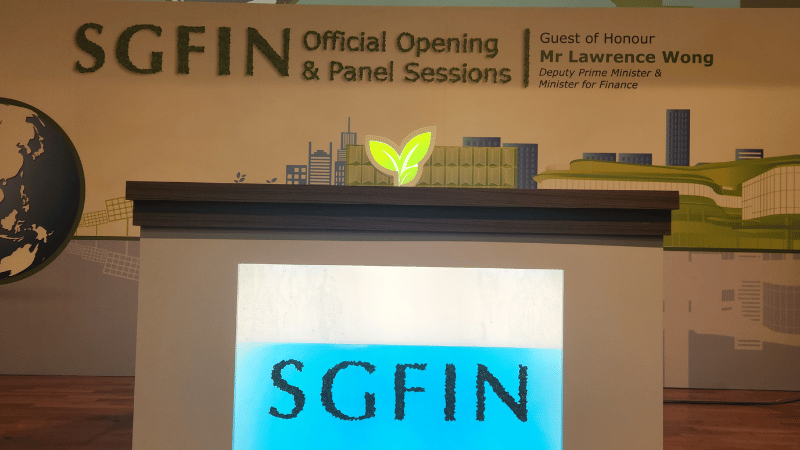
HYDSE’s work for the NUS Sustainable and Green Finance Institute provides one relevant example.
The company’s launch-mechanism portfolio states that HYDSE handled areas including key visual design, event branding, conceptualisation and production of the launch mechanism, as well as event execution.
NUS also provides additional background through its official SGFIN launch coverage.
The example shows why a finance-related mechanism does not have to fall back on obvious banking imagery.
Instead, designers can work with ideas such as:
- Responsible growth.
- Sustainability.
- Connection.
- Long-term transformation.
- Data.
- Progress.
- Partnership.
At the same time, the visual execution can remain polished enough for institutional audiences and senior stakeholders.
Working with an event management company in Singapore can help maintain that balance between creativity and professionalism across the wider event.
Brand, Logo and Identity Launch Events
A brand launch is already about transformation, so it lends itself naturally to a reveal.
The old identity might gradually disappear from the screen while the new visual language emerges. Alternatively, physical pieces could move together to form the refreshed logo.
Colour can also play a major role.
For example, the stage might begin in neutral lighting before gradually shifting into the new brand palette during the activation.
In other cases, the shape of the new logo itself can inspire the mechanism.
A circular identity could be reflected in rotating components, while a logo built around connection might be formed by several participants.
Because of this, a brand launch should not feel like a generic mechanism followed by a logo animation.
Instead, the activation can become the first live demonstration of the new identity.
The best event company in Singapore for this kind of project should therefore be able to interpret brand guidelines creatively while maintaining visual consistency.
Facility and Building Opening Ceremonies
New offices, campuses, galleries, laboratories, medical facilities and operations centres often require an official opening moment.
Traditionally, this might involve ribbon cutting or plaque unveiling. However, a custom mechanism can give organisers more room to connect the ceremony with the purpose of the new space.
A facility focused on innovation might use an interactive activation. In contrast, a heritage-related opening may benefit from a more symbolic approach.
The State Courts Heritage Gallery provides a useful example.
HYDSE’s portfolio records that its team conceptualised the event designs and produced a backdrop that incorporated the launch mechanism for the official opening.
The Singapore Judiciary provides further historical context through its official State Courts Heritage Gallery announcement.
Here, integrating the mechanism into the event backdrop helped make it part of the overall stage environment.
That approach can be useful when organisers want the activation to remain visually coherent rather than placing a standalone machine in front of the stage design.
An event management company in Singapore also needs to consider protocol, photography, guest movement and the sequence surrounding the actual opening.
Education Events and Launch Ceremonies
Educational institutions can launch everything from facilities and programmes to publications and learning initiatives.
As a result, the creative approach can vary widely.
A new campus facility may call for a symbolic physical activation. Meanwhile, an e-publication can be introduced through motion graphics and multimedia.
HYDSE’s Malay Language Seminar 2024 project provides one example.
The company’s portfolio records a publication-related launch concept, while the wider content brief also identifies the seminar as a useful example of designing a mechanism around what is actually being launched.
A digital publication does not necessarily require a physical book.
Instead, pages, graphics or key ideas can be brought to life on screen.
HYDSE’s wider portfolio also records work across education-sector ceremonies and institutional events.
An event company in Singapore working with educational institutions therefore needs to adapt to the audience and purpose rather than applying one formula to every ceremony.
Education launch ideas
- Digital book opening animation.
- Time capsule.
- Student-created symbolic object.
- Interactive programme map.
- Facility model activation.
- Multi-person activation representing different faculties or stakeholders.
Healthcare Launch Events
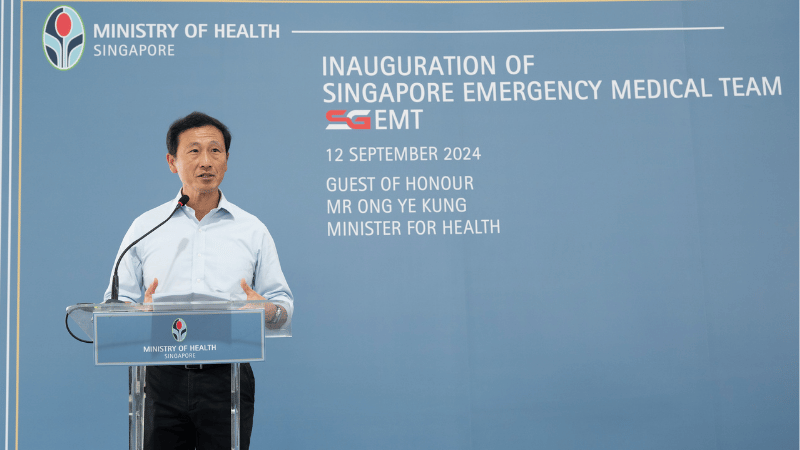
Healthcare organisations may launch new facilities, medical services, programmes, research initiatives or emergency-response capabilities.
These events often need to balance formality with a sense of progress.
For example, the mechanism might draw on ideas such as connection, care, readiness or scientific advancement. However, the concept should remain appropriate for the organisation and its audience.
The wider HYDSE portfolio documents experience across healthcare-related events, while the launch concept brief recommends using healthcare examples only where the portfolio specifically confirms launch involvement.
That distinction matters.
Not every healthcare event should automatically be described as a launch-mechanism project. Where the source confirms one, however, it can demonstrate how the format applies within the sector.
A mechanism does not need to imitate medical equipment or rely on obvious healthcare imagery.
Instead, it can reflect the purpose of the new facility or initiative in a more subtle way.
Government and Public-Sector Launch Events
Government and public-sector events may introduce national initiatives, public facilities, campaigns or services.
Often, these events involve senior guests and several stakeholder groups. As a result, reliability and protocol can be just as important as the creative idea.
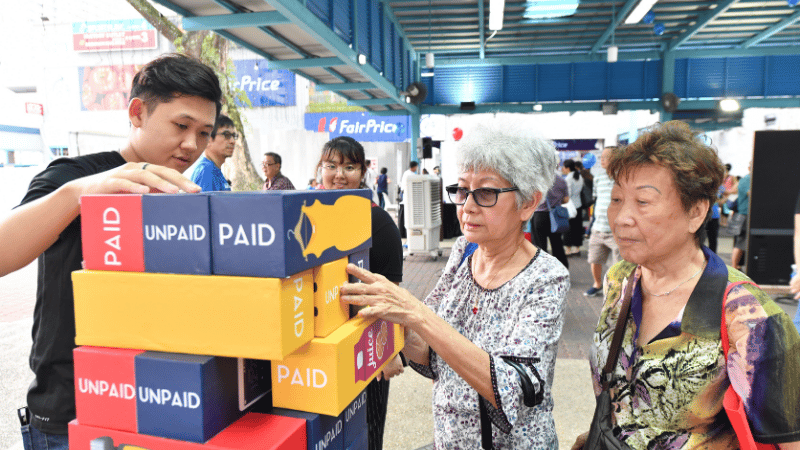
HYDSE’s Young NTUC Youth Taskforce Exhibition & Launch 2022 is one example.
According to its launch-mechanism portfolio, HYDSE conceptualised, designed and produced the interactive exhibition as well as the launch mechanism within two weeks.
The initiative itself received media coverage, and CNA’s report on the NTUC Youth Taskforce provides useful public context.
This example is particularly interesting because the launch was connected with an interactive exhibition rather than being treated as a completely separate stage moment.
For public-facing events, that relationship can work well.
First, the formal launch introduces the programme. Afterwards, the exhibition gives guests a way to explore the subject in greater depth.
When considering the best event company in Singapore for official ceremonies, organisations should therefore look at how the team manages both the launch moment and the surrounding guest experience.
Publication and Knowledge Launches
Books, reports, e-publications and research findings can also benefit from a dedicated launch moment.
However, the mechanism does not need to overshadow the content.
For example, a physical book might become the centre of a ceremonial signing. Meanwhile, an e-publication could be introduced through page animations or interactive content.
HYDSE’s Malay Language Seminar example demonstrates one approach, while its wider portfolio also records publication launches as part of other conference programmes.
In this context, the purpose is usually not to create the most dramatic reveal possible.
Instead, the launch should signal that a new body of knowledge is now available.
A symbolic action can work particularly well because it gives the publication a sense of occasion without distracting from its substance.
These launches can also be integrated naturally into conferences, seminars and anniversary programmes rather than requiring a standalone event.
Anniversary and Milestone Events
An anniversary launch has a unique storytelling opportunity.
Unlike a conventional product introduction, it looks backwards and forwards at the same time.
The mechanism can therefore acknowledge the organisation’s history while signalling the next chapter.
HYDSE’s SLNG 10th Anniversary Gala Dinner is a useful example.
According to HYDSE’s launch-mechanism portfolio, the event included a concept in which then-Deputy Prime Minister Lawrence Wong signed the foreword of the organisation’s 10th Anniversary Coffee Table Book as part of the launch mechanism. The wider programme also featured visual experiences, including light painting.
In this case, the signing itself already had meaning.
There was no need to create an unrelated interaction simply because the event needed a launch mechanism.
Instead, production elevated an authentic milestone action into a stage moment.
Anniversary mechanism ideas
| Milestone | Possible activation |
| 5th or 10th anniversary | Timeline illumination |
| Major corporate anniversary | Signature or commemorative object |
| New organisational chapter | Old-to-new transformation |
| Reopening | Symbolic door or reveal |
| Legacy celebration | Time capsule |
| Future vision launch | Digital pathway or interactive roadmap |
Planning Launch Mechanisms in Singapore
A creative concept is only the beginning.
Once the idea has been chosen, it still needs to work within a real venue, programme, technical setup and schedule.
Singapore events can take place in very different environments, from hotel ballrooms and auditoriums to campuses, convention spaces, government venues and outdoor sites.
Several practical considerations should therefore be addressed early.
Start With the Event Objective
Before discussing technology, start with the purpose.
What exactly is being launched? Why does it matter, and who needs to participate?
For example, a collaboration between several organisations may naturally suggest a multi-person mechanism. On the other hand, a new corporate identity could benefit from a reveal centred on visual transformation.
Starting with the objective also makes creative discussions more efficient.
Instead of asking the team to produce “something impressive”, organisers can describe the message the launch should communicate.
Five questions to answer first
- What exactly is being launched?
- Who needs to participate in the activation?
- What should the audience understand immediately?
- What visual moment should photographers capture?
- What happens before and after the launch?
Once these questions are answered, the creative direction becomes much clearer.
Review the Venue Before Finalising the Mechanism
A launch mechanism should be designed for the real space where it will operate.
For example, ballroom stages often have very different access routes and height restrictions from outdoor event sites.
A structure that looks manageable in a three-dimensional rendering could still be difficult to move through a loading bay or doorway.
Therefore, dimensions should be confirmed early.
The team should also consider audience sightlines. A mechanism that looks impressive from directly in front may disappear behind several VIPs when viewed from the back of the room.
Power, cable routes, stage loading and backstage storage can affect the concept as well.
For events involving licensing or regulatory considerations, organisers can refer to Singapore’s GoBusiness guidance for organising events.
Checking practical requirements early is far easier than redesigning the mechanism shortly before event day.
Plan VIP Participation Carefully
The launch mechanism may require one simple action, but the stage movement around it can be more complicated.
First, participants need a clear route onto the stage. Next, everyone needs enough space around the mechanism.
The emcee also needs to know when to introduce the activation and how long to hold before the countdown.
Meanwhile, photographers require a clear angle that captures both the participants and the mechanism.
These details are especially important for multi-person launches.
If five people need to place their hands on separate points, for example, the structure should accommodate them comfortably.
Height matters too.
A mechanism that is comfortable for one participant may be awkward for another, so the interaction should not depend on an overly precise body position.
An experienced event management company in Singapore can rehearse these movements alongside the technical activation instead of leaving them until the live programme.
Think About Safety From the Beginning
Launch mechanisms can involve temporary structures, electrical systems, moving components, stages and other production elements.
Safety should therefore influence the design from the start.
For example, moving panels should have enough clearance around participants. Similarly, cables and power connections should be routed away from high-traffic areas.
Some temporary event setups may also fall under regulatory requirements.
The Singapore Civil Defence Force’s Temporary Change of Use guidance explains requirements that may apply to certain temporary events and uses.
Likewise, some event activities may involve public entertainment licensing. Organisers can refer to Singapore Police Force information on Public Entertainment Licences for official guidance.
Because requirements depend on the actual event setup, organisers should always check the relevant authorities rather than assume the same rule applies to every launch.
Safety and technical checklist
Before event day, confirm:
- Mechanism dimensions and weight.
- Stage loading limits.
- Power requirements.
- Cable management.
- Moving-part clearance.
- Emergency stop or manual override where relevant.
- Participant positions.
- Audience distance.
- Fire and venue requirements.
- Backup activation method.
- Full rehearsal completed.
Build the Mechanism Into the Show Flow
A launch mechanism should not feel like an isolated object that suddenly appears in the programme.
Instead, think about what happens immediately before and after it.
Perhaps the Guest-of-Honour finishes a speech before several representatives are invited forward. As they move into position, the lighting may change and background music begins.
The emcee then starts the countdown.
Once the mechanism is activated, the LED backdrop might transition into a launch film. Alternatively, the participants could remain on stage for photographs before the programme moves into another segment.
Planning this sequence makes the launch feel smooth.
Without it, the event may have an awkward pause while crew members reposition equipment or guests wait for the next cue.
The technical mechanism is only one part of the moment.
The best event company in Singapore for a launch should therefore be able to map the activation into the wider rundown, including participant movement, multimedia cues, photography and the next programme segment.
Keep the Participant Experience Simple
The most sophisticated launch mechanism should still be easy to use.
Ideally, each participant performs one obvious action.
For example, they press, touch, insert, turn, place or sign something.
Behind the scenes, that single action can trigger several technical responses.
Lighting can change, audio can play and animation can begin without the participant having to think about any of those systems.
That is good interaction design.
By contrast, a mechanism that requires several instructions increases the chance of confusion.
The audience should be watching the launch itself, not watching a VIP try to remember which control to use.
Rehearse the Real Launch Sequence
Technical testing and event rehearsal are not the same thing.
A technical test asks whether the mechanism works. A rehearsal asks whether the moment works.
For example, the sensor may activate perfectly during testing, but a rehearsal could reveal that one participant blocks the photographer’s view.
Similarly, the LED animation may trigger correctly but begin so quickly that there is no clear hero shot after the launch.
These issues are difficult to identify when individual systems are tested separately.
Therefore, the team should rehearse the full sequence whenever possible.
What should be rehearsed together?
- VIP entrance.
- Stage positioning.
- Emcee cue.
- Countdown.
- Participant interaction.
- Mechanism trigger.
- Lighting response.
- Audio cue.
- LED animation.
- Photographer positioning.
- Post-launch photo hold.
- Exit or next programme segment.
An event company in Singapore handling the launch should view the rehearsal as a complete performance rather than simply a technical equipment test.
Prepare a Contingency Plan
Every launch mechanism should have a backup.
That does not necessarily mean building a second identical structure.
Instead, the team should think through what happens if a sensor does not respond, playback stalls or a moving component cannot operate.
For digital activations, the technical crew may have a manual trigger available. Mechanical reveals may require a simplified backup action.
The audience may never know that a contingency exists, and that is exactly the point.
A good backup plan keeps the programme moving without drawing attention to the technical issue.
Why Custom-Built Launch Mechanisms Matter
There is nothing inherently wrong with a standard launch button.
Sometimes a straightforward activation is exactly what the event needs.
The problem appears when the same device is used for every event regardless of what is being launched.
A medical facility, sustainability institute, youth initiative and anniversary publication represent completely different ideas. Giving all four the same mechanism removes an opportunity to make the launch more meaningful.
Customisation does not always mean building something enormous or expensive.
It can be as simple as changing the action.
For example:
- LKCMedicine used a time capsule concept.
- SGFIN involved a launch mechanism developed around the institute and event.
- The State Courts Heritage Gallery integrated the mechanism into its backdrop.
- NTUC Youth Taskforce combined a customised activation with an interactive exhibition.
- SLNG’s anniversary mechanism centred on a symbolic signing moment.
Each approach reflected a different purpose.
This is what organisations should consider when choosing the event company in Singapore that will support the project.
The question is not only whether the company has a mechanism available. It is whether the team can understand the objective and develop an activation that fits it.
A customised mechanism also gives designers more control over how the launch appears in photos and videos.
Branding can be integrated into the structure. Lighting can highlight the relevant areas, while the activation can be sized according to the number of participants.
As a result, the mechanism feels like part of the event instead of something added to the stage at the last minute.
How HYDSE Develops Launch Experiences
The development process begins with understanding the launch.
Before deciding how the mechanism should look, it helps to know what the organisation is introducing, who the audience is, who will activate it and why the announcement matters.
From there, the concept can take shape.
A publication launch may grow from the content or format of the publication itself. A technology event could begin with the way users interact with the platform.
Likewise, a facility opening may draw from the architecture, purpose or history of the space.
The HYDSE process can be understood in six stages:
| Stage | What happens |
| 1. Understand | Clarify event objective, audience and launch purpose |
| 2. Conceptualise | Develop the central mechanism idea |
| 3. Design | Shape the physical, visual and interaction details |
| 4. Produce | Fabricate, animate, programme and prepare |
| 5. Test | Check functionality, timing and contingency |
| 6. Execute | Coordinate the launch with the live event programme |
Once the concept is established, practical design comes next.
The team has to determine size, materials, activation method, branding, technical response and stage integration.
Multimedia content may need to be developed alongside the physical mechanism so both elements appear connected.
Fabrication and programming then turn the idea into something that can actually be tested.
This stage is important because a mechanism needs to do more than look good in a rendering. It has to survive transport, setup, rehearsals and repeated testing before performing reliably during the live event.
Event-day execution brings everything together.
Stage managers cue participants. Technical crew monitor the mechanism, while audio-visual teams prepare the content.
Photographers move into position and the emcee starts the countdown.
The audience sees a few seconds.
The production team sees all the planning that made those seconds possible.
HYDSE’s portfolio shows experience across concept development, design, multimedia production, interactive hardware and overall event execution.
That broader capability is useful when organisations need an event management company in Singapore that can coordinate the mechanism as part of the full event rather than treating it as standalone equipment.
Frequently Asked Questions About Launch Mechanisms
What is a launch mechanism at an event?
A launch mechanism is the physical or digital action that officially marks the introduction of a product, service, facility, programme, publication, brand identity or milestone.
It can include buttons, sensors, interactive displays, unveilings, time capsules, symbolic objects or custom-built structures.
Does every launch need a custom mechanism?
No.
A standard push-button activation may be suitable when simplicity is the priority.
However, customisation can help when the organisation wants the mechanism to reflect the purpose of the launch, accommodate specific VIPs or integrate closely with event branding.
How much does a launch mechanism cost in Singapore?
There is no single standard price because mechanisms vary greatly in complexity.
A basic branded activation console is very different from a custom-built structure involving fabrication, moving parts, interactive programming and multimedia.
Cost may depend on:
- Size.
- Materials.
- Fabrication complexity.
- Sensors or electronics.
- Multimedia production.
- Number of VIPs.
- Venue setup.
- Installation.
- Transport.
- Rehearsal and technical support.
Rather than starting with a machine, it is usually more useful to define the launch objective first.
How early should a launch mechanism be planned?
Custom mechanisms should ideally be discussed early in the event-planning process.
This gives the team enough time to develop the concept, review the venue, fabricate the structure, create multimedia content and test the activation.
More complicated mechanisms naturally require more lead time.
Can launch mechanisms be used for smaller events?
Yes.
A memorable mechanism does not have to be large.
For a smaller executive event, an elegant tabletop interaction, touchscreen activation or symbolic object may be more suitable than a large installation.
In fact, a compact mechanism can sometimes feel more refined.
Can several VIPs activate a launch together?
Yes.
Multi-person activations are common for partnerships, institutional events and official ceremonies.
The main consideration is usability. Every participant should have a clear position and a simple action to perform.
Can a launch mechanism trigger LED content or video?
Yes.
A physical interaction can trigger content on an LED wall or other display.
Lighting and audio cues can also be synchronised, creating one coordinated launch sequence.
What happens if the mechanism fails?
A professional production team should plan a contingency.
For example, a sensor-based activation may have a manual technical trigger available behind the scenes.
The backup should allow the programme to continue without drawing attention to the problem.
What industries can use launch mechanisms?
Almost any organisation introducing something publicly can use one.
Common sectors include:
- Technology.
- Finance.
- Healthcare.
- Education.
- Government.
- Infrastructure.
- Research.
- Professional services.
- Community programmes.
- Consumer products.
The mechanism itself should change to suit the context.
Is a launch mechanism the same as an opening ceremony?
Not exactly.
An opening ceremony is the broader event programme. The launch mechanism is usually one moment within it.
A typical opening could include speeches, videos, the activation, photography and a tour of the new space.
Quick Planning Checklist for Your Next Launch
Before approving the concept, organisers can use this checklist:
Creative
- Does the mechanism relate to what is being launched?
- Is the idea easy to understand?
- Does it fit the organisation’s brand?
- Will it create a clear visual moment?
Technical
- Has the venue been checked?
- Can the mechanism fit through access routes?
- Are stage load and power requirements confirmed?
- Are moving parts safe?
- Is there a backup activation?
VIP and Programme
- Is each participant’s position clear?
- Is the interaction simple?
- Has the emcee cue been rehearsed?
- Is there enough time for photography?
- Does the next programme segment follow smoothly?
Content
- Does the LED animation match the activation?
- Is the countdown timing correct?
- Are logo and brand assets final?
- Is the launch message immediately understandable?
Make the Launch Moment Count
A launch mechanism does not have to be the largest or most technically complicated element at an event.
It simply has to make the moment matter.
Sometimes that means an interactive digital activation. In another setting, it could be a time capsule, physical unveiling, publication signing or custom-built structure.
The right choice depends on what is being launched and what the organisation wants its audience to remember.
HYDSE’s project experience shows how varied these moments can be. Its portfolio includes launch work across educational institutions, financial organisations, government initiatives, publications, facilities and milestone events.
Across those projects, the format changes because the purpose changes.
For organisations looking for the best event company in Singapore to support a launch from creative concept through production and live execution, it is worth choosing a team that begins with the objective instead of forcing every announcement into the same mechanism.
HYDSE can work from the event story, audience, brand, participant requirements and technical environment before developing the activation.
Because the launch itself may last only a few seconds, it can be easy to underestimate its importance.
Yet those few seconds are often when every camera in the room is pointed in the same direction.
Make them count.